
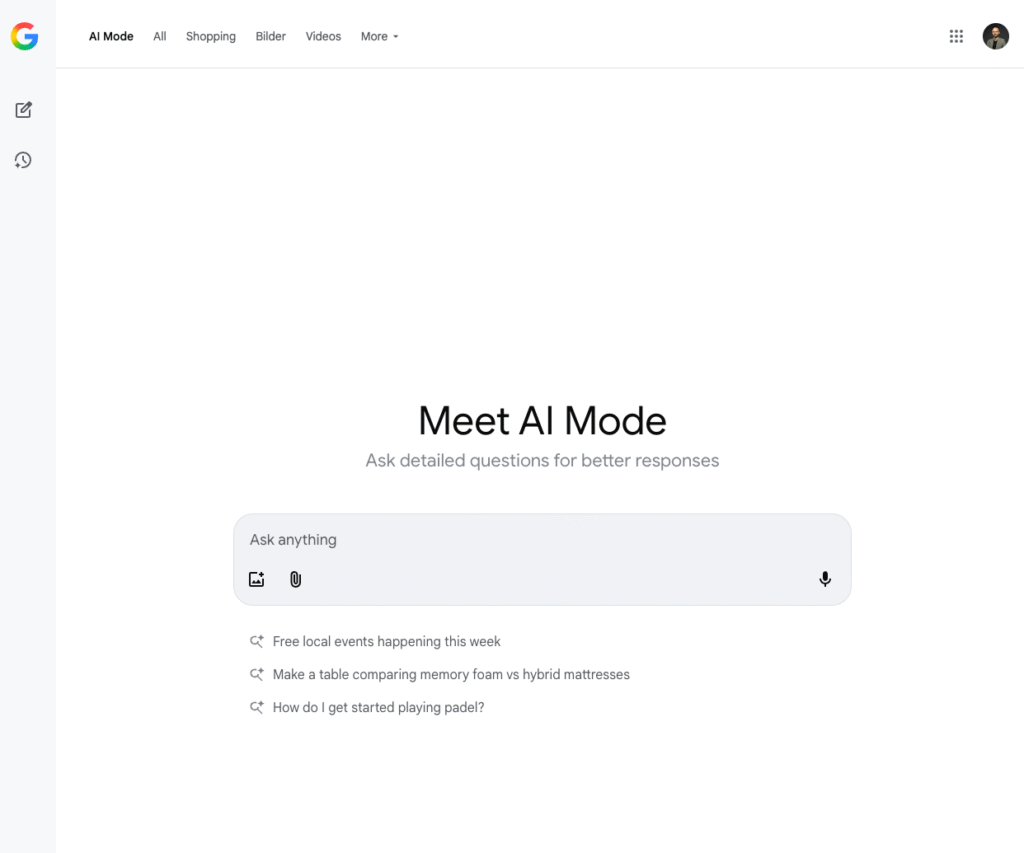
What is Google AI Mode?
AI Mode is Google’s search interface for longer questions and ongoing conversations. Following AI Overviews, it adds a dedicated space for AI-powered answers. This article covers its introduction in Germany, Austria and Switzerland in October 2025.
Rather than only presenting individual search results, AI Mode combines information into an answer and links to supporting sources. The interface is powered by Gemini and can be accessed through a dedicated area in Search.
- Ask complex questions and explore them through follow-ups.
- Use text, voice or images where the relevant input features are available.
- Combine comparisons, research and planning in one conversation.
- Explore information from the web with linked sources.
Available features can vary by country, language, account and date. Personalisation features therefore need separate checks for availability and any required consent.
How does query fan-out work?
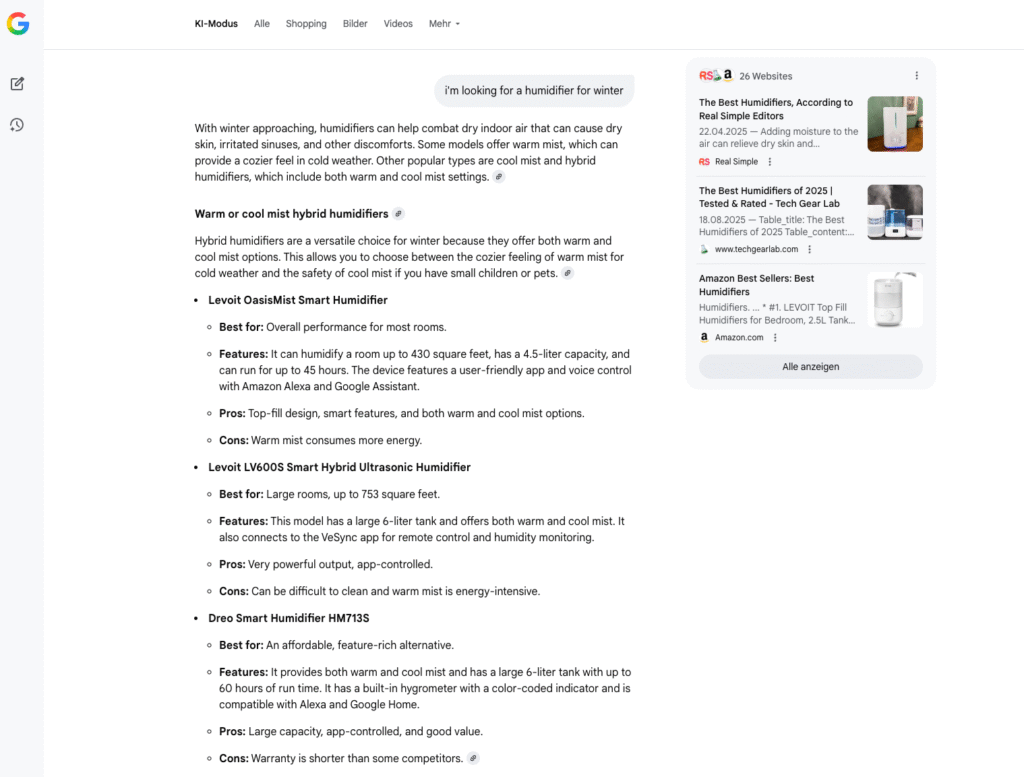
Query fan-out breaks a complex question into smaller subtopics and runs multiple searches. The system then combines the information into one answer, potentially including source links, images or tables.
This can help with travel planning, product comparisons or insurance research. Users can refine their criteria without having to frame every subquestion as a separate search.
What does this mean for SEO and content teams?
A brand can appear in an AI answer without receiving a website visit. Visibility and clicks therefore need to be assessed separately. Click-through behaviour depends on intent, subject and presentation; there is no single effect that applies to every website.
Businesses need to understand the role their content plays in research: is it used as a source, does it answer relevant subquestions, and do resulting visits lead to qualified enquiries or purchases?
How should you prepare your website?
- Check technical accessibility: crawling, indexability and access to important content.
- Write clear sections: answer a specific question, then provide detail and evidence.
- Demonstrate expertise through authorship, first-hand experience, data and traceable sources.
- Add relevant images and videos when they improve understanding.
- Measure mentions, citations, website visits and business outcomes together.
These practices support a useful website but do not guarantee inclusion in AI answers. Google does not specify extra technical requirements for AI Mode or AI Overviews beyond its existing search requirements.
What can you measure in Search Console?
Google includes AI Mode activity in the Search Console performance report under the Web search type. Clicks on source links count as clicks, and follow-up questions are treated as new queries. At the reporting stage described in the original article, AI Mode could not be filtered separately.
Overall click and impression trends should not automatically be interpreted as isolated AI Mode effects. Complement them with website conversions and documented observations of relevant AI answers.
Google Search Central: AI features and your website
Why does this shift matter?
AI Mode extends search from individual results to ongoing research. Alongside rankings, businesses need to consider whether their content serves as a useful source in answers. Clear structure, reliable information and technical accessibility provide the foundation.